
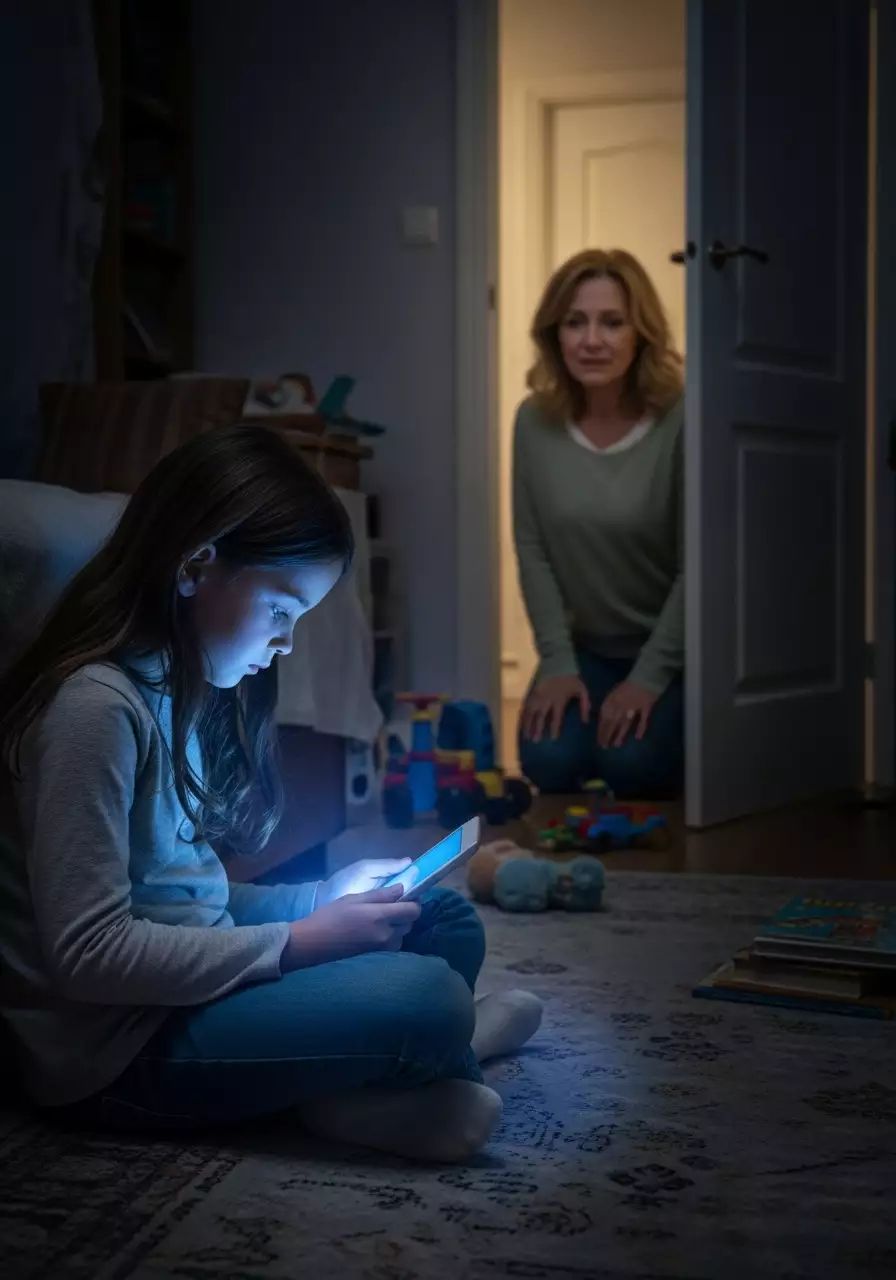
What if one 20-minute tweak to your child’s bedroom could cut bedtime resistance in half? This guide shows you the simple layout, lighting, and wind-down cues that help kids transition from “scroll” to “sleep”—without battles.
First, the why: Late-evening screens delay sleepy signals and displace reading/conversation. For the science and age-by-age guidance, read How Much Is Too Much? Screen Time & Kids. When you’re ready to build the nightly routine, use A Calmer Bedtime for Screen-Busy Kids.

The bedroom rule that changes everything: no devices overnight
Charging phones and tablets outside the bedroom removes the biggest reactivation trigger: a buzz or ping in the light-off window. Create a central charging station in the hallway or kitchen. If your child needs a “clock,” use a basic alarm clock with a dimmable display.
Layout: where things go (and why it matters)
- Door-to-bed line of sight: Place the bed where your child can see the door easily to reduce “what’s out there?” vigilance.
- Reading nook: A small bin of age-appropriate books beside the bed anchors the wind-down ritual.
- Clutter-lite surfaces: Clear the nightstand except for a lamp, a single book, and soothing cues (e.g., bedtime diffuser).
Lighting: set the body clock up for sleep
Light is a powerful circadian cue. Aim for a “bright days, dim evenings” rhythm:
- Daytime: maximize outdoor light and bright indoor exposure.
- Evening: switch to warm/low-blue bulbs ~60–90 minutes before bed. Dim overheads and use a small bedside lamp.
- Night: if a nightlight is needed, choose a very low-amber light pointed away from eyes.
Soothing cues: what to add (and what to skip)
- Sound: steady white-noise can mask household sounds; avoid stimulating playlists.
- Touch: a short foot or calf massage helps the body “downshift.” Many families like a magnesium cream or roll-on as a calming ritual.
- Scent: a gentle kid-safe diffuser blend 15–20 minutes before lights out can signal “bedtime now.” Use as part of the environment, not as a remedy.
The 60-minute wind-down (simple flow)
- T-60: entertainment screens off; devices to the charging station.
- T-45: dim lights; PJs; teeth.
- T-30: start diffuser; optional light snack if needed.
- T-15: family reading (or quiet talk); brief magnesium roll-on/cream massage.
- T-0: lights out; white-noise on.
Common pitfalls (and fixes)
- “He says he needs his phone for music.” Use a small speaker with a timer or a white-noise machine; playlists can re-activate attention.
- “She worries in the dark.” Try a predictable script (“three things we’re grateful for”), very low nightlight, and a consistent check-in.
- “He sneaks screens.” Remove the temptation—no devices in the room; add a gentle morning bonus (pick breakfast cereal on Fridays).
Build your physical “bedtime kit”
- Bedside lamp (warm bulb) + dimmable nightlight
- 2-3 favorite books in a small bin
- White-noise machine or app
- Diffuser blend & aromatics (light, age-appropriate use)
- Magnesium cream/roll-on for a short massage
FAQs
Why remove devices if my child “won’t sleep without them”?
Because screens stimulate and delay sleep—removing them is the highest-leverage step. Swap in predictable, low-arousal cues (reading, massage, soft light) and expect a 3–7 day adaptation period.
Is a diffuser safe?
Use kid-appropriate blends lightly and for short periods as an environmental cue. Keep devices out of reach and follow label guidance.
How long until this works?
Most families see easier bedtimes within a week, especially when daytime light and outdoor time improve.
Next steps & internal links
- How Much Is Too Much? Screen Time & Kids (the science)
- A Calmer Bedtime for Screen-Busy Kids (the step-by-step routine)
- VAL Happy Kids (chewables, calming topicals, gentle aromatics)
Disclaimer: Educational content only; not medical advice. Consult your pediatrician for personalized guidance. Keep all supplements out of children’s reach.
Kid-Safe Aromatics at Bedtime: Gentle Diffuser Blends, Simple Routines, and Safety Tips
Magnesium for Kids: Glycinate vs. Citrate vs. Oxide (Pros, Cons, and When to Use)